Hazelden Betty Ford operates a larger multi-state network of campuses. Caron operates a smaller, more concentrated set of campuses in Pennsylvania and Florida with outpatient locations in several additional metro areas.
Caron Treatment Centers vs. Hazelden Betty Ford
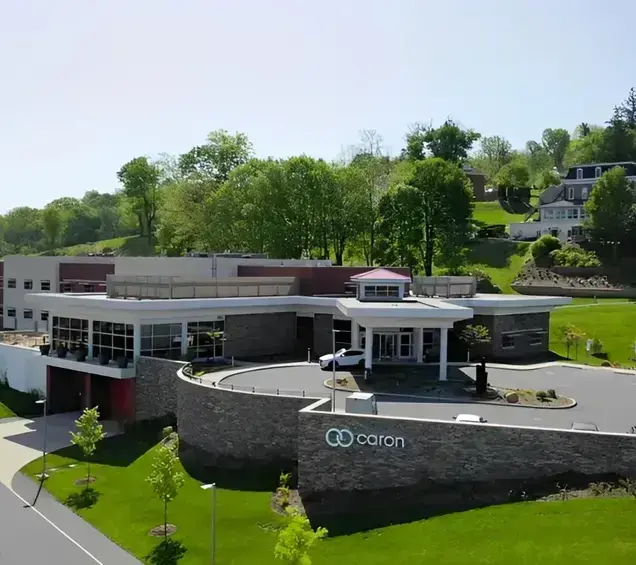
Which Addiction Treatment Program Is Right for You?
Choosing a treatment center is one of the most consequential decisions a person or family will make during a health crisis. Two names come up often in that search: Caron Treatment Centers and Hazelden Betty Ford Foundation. Both are well-established, nonprofit, nationally accredited providers with decades of history in addiction and behavioral health treatment. Below, we compare the factors that may affect your decision, including each provider’s clinical approach, locations, accreditation, specialty programs, and reported outcomes, so you can make an informed choice for yourself or a loved one.
Quick Overview
Caron Treatment Centers is a nonprofit addiction and behavioral health treatment provider founded in Wernersville, Pennsylvania, with nearly 70 years of clinical history. Caron operates campuses in Pennsylvania and Florida, plus outpatient locations in Philadelphia, the Washington, D.C. metro area, Atlanta, and New York City. Caron is accredited by CARF (Commission on Accreditation of Rehabilitation Facilities) and holds applicable state licensures in each location, and its Pennsylvania campus is also SAMHSA-certified as an Opioid Treatment Program.
Hazelden Betty Ford Foundation is a nonprofit formed in 2014 through the merger of Hazelden (founded in Minnesota in 1949) and the Betty Ford Center (founded in California in 1982). It is a larger, multi-state network with locations across Minnesota, California, Oregon, Illinois, Florida, Washington, and New York, plus a graduate school and publishing arm. Hazelden Betty Ford is accredited by The Joint Commission.
Accreditation: What It Means for You
Both organizations have earned national, third-party accreditation, which is a meaningful baseline for quality and safety. The accrediting bodies differ in focus:
-
Caron holds CARF accreditation, a process built specifically around field-driven standards for addiction and rehabilitation programs, with an emphasis on person-centered, continuous-improvement practices developed alongside the American Society of Addiction Medicine (ASAM).
-
Hazelden Betty Ford holds Joint Commission accreditation, the same body that accredits hospitals broadly across healthcare, with reviews conducted at least every three years.
Both accreditations are legitimate and respected. The practical difference is that CARF's standards were built specifically for rehabilitation and behavioral health providers, which aligns directly with the focused, addiction-specific continuum of care Caron has refined for nearly seven decades.
Clinical Approach
Caron's model centers on individualized, evidence-based treatment that combines traditional modalities (cognitive behavioral therapy, dialectical behavior therapy, motivational interviewing, 12-Step integration) with advanced neurorestorative therapies designed to support brain health during recovery. Treatment plans are built case-by-case, with attention to co-occurring conditions like chronic pain, trauma, and other mental health diagnoses, rather than a single fixed program track.
Hazelden Betty Ford's model is built around a structured 12-Step framework, layered with medication-assisted treatment, psychiatric care, and complementary therapies such as DBT and motivational interviewing. Its larger network and step-down structure allow patients to move between residential, day treatment, and outpatient care without changing facilities in some locations.
Both organizations treat substance use disorders alongside co-occurring mental health conditions. The key distinction is scale and specialization: Caron's smaller campus footprint allows for a more concierge-style, individualized treatment experience, while Hazelden Betty Ford's larger network emphasizes geographic reach and a standardized 12-Step continuum.
Specialty Programs
Caron has built out a number of population-specific programs that go beyond general addiction treatment, including:
-
Programs for executives and professionals, including healthcare, aviation, and legal fields
-
A dedicated older adult program addressing complex medical needs
-
LGBTQIA+-focused care
-
Chronic pain and co-occurring gambling addiction tracks
-
Family programming and the multi-day Breakthrough workshop series for individuals and couples
Hazelden Betty Ford also offers LGBTQIA+-inclusive care and family programs, along with a youth and adolescent track and its own graduate-level addiction studies school. Its broader network supports a wide range of program types, though individual specialty offerings vary by location.
Locations and Setting
Caron | Hazelden Betty Ford | |
|---|---|---|
Headquarters | Wernersville, PA | Center City, MN |
Inpatient Campuses | Pennsylvania, Florida (Delray Beach) | Minnesota, California, Oregon, Illinois, Florida |
Outpatient Locations | Philadelphia, D.C. Metro, Atlanta, New York City | Multiple states, including outpatient and virtual options in NY, IL, and elsewhere |
Setting | Smaller, concierge-style campuses | Larger, distributed network |
If a more intimate, lower-census campus environment matters to you or your family, Caron's footprint is intentionally structured around that experience. If broad geographic access to a single brand network across many states is the priority, Hazelden Betty Ford's larger footprint may be a better fit.
Outcomes and Reputation
Caron has been recognized by Newsweek as one of America's best addiction treatment centers, and independent insurance data cited by Caron shows its recovery rate outperforming other providers in the same studies, with a correspondingly lower readmission rate. Client reviews frequently cite the depth of the alumni network and the consistency of clinical staff as differentiators.
Hazelden Betty Ford is widely recognized as one of the largest nonprofit addiction treatment networks in the country, with a long institutional history tied to its name recognition through the Betty Ford Center.
Insurance and Cost
Neither Caron nor Hazelden Betty Ford accepts Medicaid; both work with commercial insurance and offer private-pay options, and both encourage prospective patients to verify in-network status directly with admissions before committing to a program.
How to Choose
Your decision should begin with the level of care recommended after a clinical assessment. From there, compare whether the specific location offers the specialty services, medical support, family involvement, and continuing care you need.
Caron may be a stronger fit if you are seeking highly individualized treatment or specialized programming for executives, older adults, or people with chronic pain and a CARF-accredited clinical model built specifically around addiction and behavioral health rather than general hospital-style accreditation. Hazelden Betty Ford may be a better fit if a multi-state network and a more standardized 12-Step structure are higher priorities for your family.
Hazelden Betty Ford may be a better fit if a multi-state network and a more standardized 12-Step structure are higher priorities for your family.
The most reliable way to decide is to speak directly with admissions teams at both organizations, ask about specific program tracks, confirm insurance coverage, and, where possible, tour the facility or speak with alumni.
Frequently Asked Questions
Both work with a range of commercial insurance providers and do not accept Medicaid. Coverage varies by plan, so it's best to verify directly with each center's admissions team.
Caron has a long-standing, dedicated track for executives and professionals across healthcare, aviation, and legal fields, alongside a separate older-adult program.
Yes. Caron is accredited by CARF, a body focused specifically on rehabilitation and behavioral health standards. Hazelden Betty Ford is accredited by The Joint Commission, which accredits healthcare organizations broadly.

Take the next step:
- Caron in Pennsylvania 1-800-854-6023
- Caron in Florida 1-800-221-6500
- Breakthrough at Caron 1-800-213-7834
Start with an online form